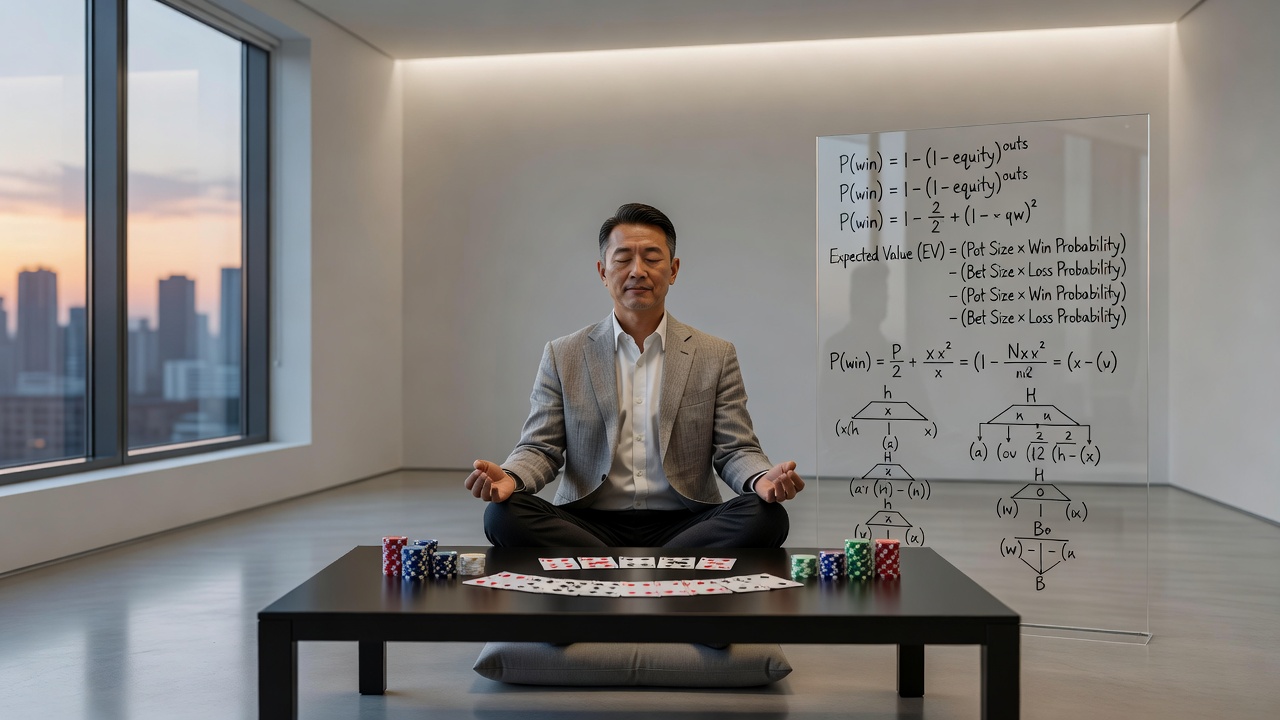
Insight Meditation's Role in Advancing Probabilistic Reasoning for Poker Players
Insight meditation, often practiced through structured observation of mental processes, connects directly with the demands of poker mathematics where players assess probabilities under uncertainty, and researchers have documented how sustained attention training influences cognitive patterns in decision scenarios that involve calculating odds and expected values over multiple hands.
Core Elements of Insight Meditation Practice
Insight meditation trains individuals to observe thoughts and sensations without immediate reaction, which builds a foundation for clearer evaluation of numerical data in games like poker, and studies from psychology departments at various universities indicate that regular sessions lasting 20 to 45 minutes daily correlate with improved performance on tasks requiring sustained focus on probabilistic outcomes.
Participants report enhanced ability to track multiple variables simultaneously during play, such as pot odds combined with implied odds, while data from controlled trials shows measurable shifts in brain activity associated with executive function after eight weeks of consistent practice.
Probabilistic Frameworks in Poker Mathematics
Poker relies on precise calculations of hand equities, combinatorics, and risk-reward ratios where players must integrate incomplete information from betting patterns and board textures, and organizations like the American Gaming Association have compiled industry reports highlighting how mathematical literacy separates consistent winners from recreational participants across both live and online formats.
Software tools that simulate millions of scenarios provide baseline data, yet human application of those figures during real-time decisions introduces variables that meditation-related cognitive training appears to address through reduced interference from emotional fluctuations.
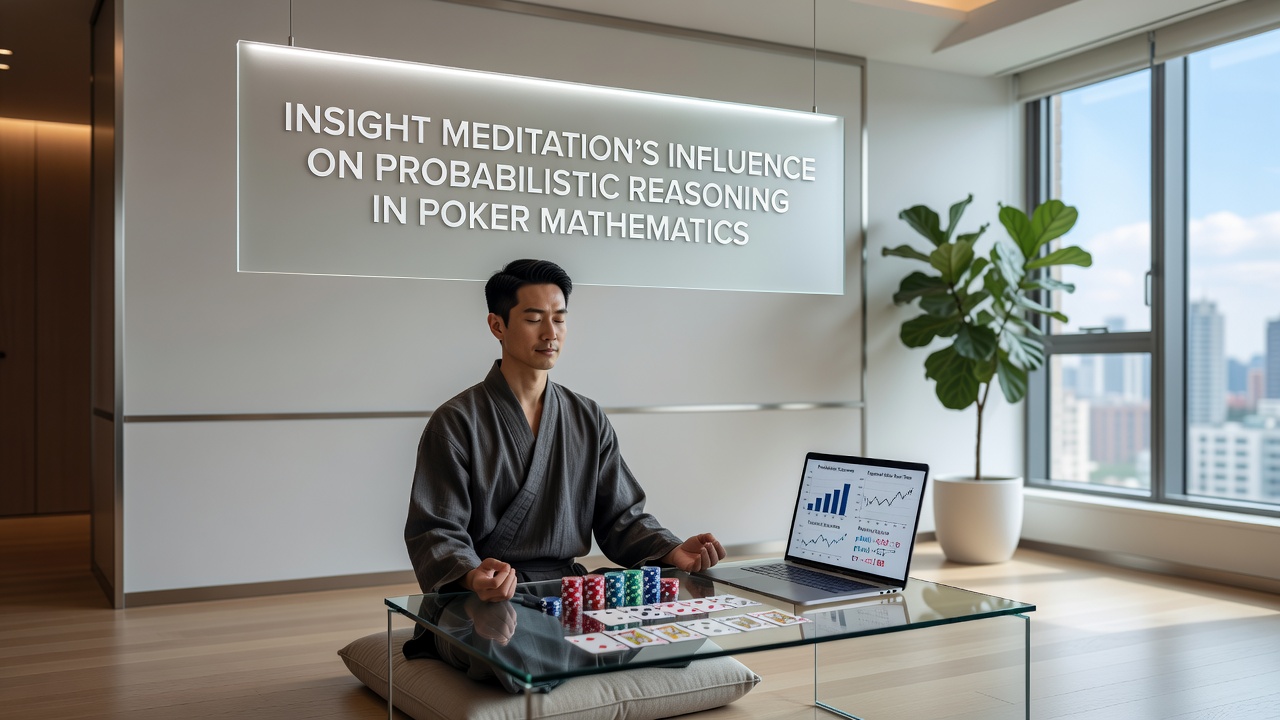
One study published through the National Institutes of Health examined mindfulness interventions and found participants demonstrated higher accuracy when estimating likelihoods in sequential choice experiments that mirror poker hand progression, and those results align with observations from professional circuits where players incorporate breath awareness techniques between hands to maintain analytical clarity.
Documented Connections Between Practice and Performance
Training programs that combine insight meditation with poker-specific probability drills have emerged in training academies across North America and Australia, where instructors note that students exhibit steadier adherence to pre-calculated ranges after meditation segments, and figures from longitudinal tracking reveal lower deviation rates from optimal strategies in simulated environments.
Research institutions in Canada have released papers detailing how attention regulation supports working memory capacity, a factor directly tied to recalling probability distributions for different board runouts, while European academic groups have explored similar intersections through cognitive science lenses that emphasize pattern recognition under time pressure.
Events scheduled for August 2026 include workshops at regional poker conferences that integrate these elements, providing attendees with updated datasets on how meditation protocols affect equity realization in multiway pots.
Practical Applications Observed in Training Settings
Coaches describe sessions where players review hand histories immediately after meditation periods, allowing the mental clarity gained to facilitate more accurate reconstruction of decision trees involving fold equity and reverse implied odds, and case examples from training logs show participants revising their ranges based on recalculated probabilities with greater consistency.
Industry reports from gaming research bodies further indicate that players who maintain meditation routines display measurable improvements in session length endurance, which in turn supports deeper engagement with complex mathematical models during extended tournaments.
Conclusion
Available evidence positions insight meditation as a complementary tool that supports the cognitive demands of probabilistic reasoning in poker, with research continuing to map specific mechanisms through which attention training intersects with mathematical application in competitive settings, and ongoing studies scheduled through 2026 aim to refine these connections with larger participant pools across multiple regions.